The Green Tick Illusion: Why Uptime Dashboards Fail the Moment They Matter
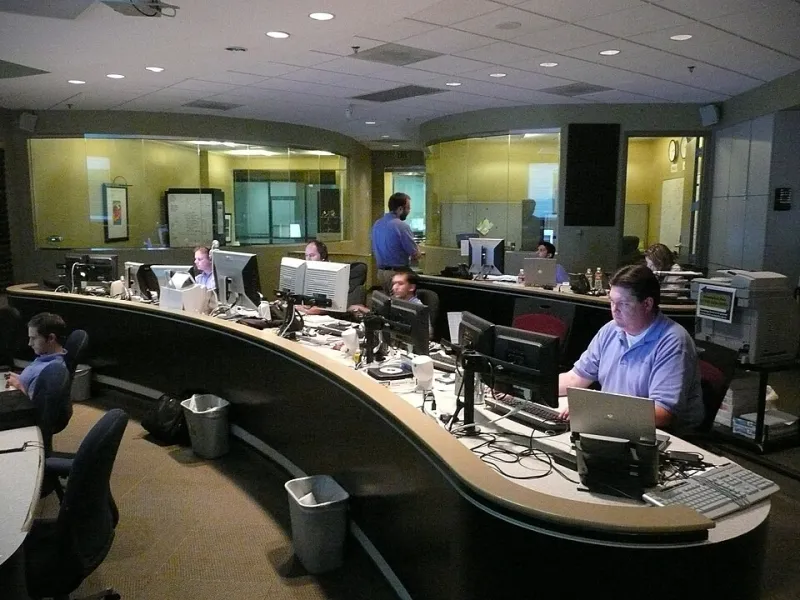
Photo: Mike Reyher, CC BY 2.0, via Wikimedia Commons
At 09:12 on an ordinary Tuesday, a UK distributor's customer service inbox begins to fill with the same complaint, phrased a dozen different ways. The order portal will not load. The status page, refreshed by a member of the support team, is a wall of green. Every component listed is operational. The incident, as far as the provider's own dashboard is concerned, does not exist.
Forty minutes later the page updates. The wording is careful: "investigating reports of intermittent latency." By then the distributor has lost a morning's orders and answered several hundred enquiries without a script, because nobody had told them what to say.
This is not a story about an incompetent hosting provider. It is a story about a category error that has become endemic in the UK market: treating a technical uptime dashboard as though it were an incident communication strategy.
What a Status Page Actually Measures
A provider's status page is usually fed by synthetic checks: automated probes hitting a nominated endpoint at intervals and recording whether a response came back inside a threshold. That is a useful signal, and it is a narrow one. It tells you that a machine answered. It does not tell you that the database behind the application is returning stale records, that a payment gateway is timing out, that a load balancer is routing a slice of traffic to a node with a saturated disk, or that customers in one region are failing while the probe — sitting in a data centre elsewhere — sees nothing wrong.
The gap between "our checks pass" and "our customers can use the service" is where reputations are lost. Whether that gap is closed is partly a technical question and largely a governance one. Some providers supplement synthetic checks with real user monitoring, transaction tests that complete a full login or checkout, and a customer-reported incident channel. Many do not. The dashboard looks identical either way.
Silence Is Rarely Neutral
There is a commercial logic to late updates. Declaring an incident early means declaring it before the cause is understood, and organisations are wary of being wrong in public. But the absence of a statement is itself a statement, and the audience reads it accordingly. A support team told nothing will invent a narrative — usually a worse one than the truth — and pass it to customers.
The more serious consequence is operational. Without a defined notification path, the first reliable signal of a problem often arrives from outside: an email, a social media post, a call from the account manager at a key client. In a business-critical application, that inversion is expensive. It means the organisation is reacting to its users rather than to its systems, and that the people responsible for the relationship are learning about the failure from the people affected by it.
UK regulators have made a version of this point already. The operational resilience requirements that took effect for banks, insurers and payment firms in March 2025 oblige firms to set impact tolerances for important business services and to plan how they will communicate during disruption. The obligation rests with the regulated firm, not with its hosting provider. A supplier's green dashboard is not a defence.
What a Useful Incident Update Contains
Communication readiness is a design discipline, not a personality trait. A genuinely useful update during an incident tends to contain six elements, usually in this order:
- What is affected. Name the service and the affected functions, not the underlying hardware. "Checkout and order confirmation" is more useful than "eu-west-2 compute cluster."
- Who is affected. All users, or a subset? A particular region, tenant, integration or authentication route?
- When it started. A timestamp, not an approximation. Customers reconstruct their own losses from timestamps.
- What is being done. A short, factual statement of current action, with an accountable team named.
- What the customer should do. Whether to retry, queue work, switch to a fallback or wait. This is the element most often missing, and the one support teams need most.
- When the next update will arrive. A time, not a promise. Even "no further update before 14:00 unless the situation changes" is more reassuring than silence.
None of this requires root-cause knowledge. It requires a template, an owner and the discipline to publish before certainty arrives.
The Provider Side of the Contract
UK buyers should treat incident communication as a purchasable feature with terms attached. Before signing in 2026, the following questions are worth putting in writing and keeping on file:
- At what threshold does an event become a declared incident, and who has authority to declare it?
- What is the target interval from detection to first customer notification — and is it contractual or merely aspirational?
- Through which channels will notification arrive, and can the business nominate several recipients, including an out-of-hours rota?
- Is the status page fed by synthetic monitoring alone, or by transaction-level and real-user data?
- Is a post-incident report provided, within what period, and does it include a timeline and an assessment of customer impact?
- Are communication failures themselves treated as incidents?
- How are weekends, bank holidays and overnight windows handled differently, if at all?
A provider that cannot answer the second question with a number is telling you how much weight to place on the rest.
Rehearsing Before the Pressure
The customer's own readiness matters as much as the provider's. A one-page document — not forty — naming who drafts the update, who approves it, which accounts receive a personal call and which support scripts are used removes most of the improvisation. Rehearsing it once a year, ideally during a scheduled maintenance window when the stakes are low, is the difference between a plan and an assumption.
The status page has its place. It is a sensor, not a spokesperson. Businesses that confuse the two generally discover the distinction at the worst possible moment: mid-morning, with the green ticks glowing, and the inbox filling up.